Productivity Macros: How to Go From Voice-Notes to Slides in 3 Clicks
Posted by Aipilot on
You've just finished a brilliant brainstorming session. Your head is buzzing with ideas, and you've got a rough voice memo full of golden insights. The only problem? Someone now needs to turn those scattered thoughts into a polished, presentation-ready slide deck — and that someone is almost always you. Cue the collective sigh of every teacher, trainer, and working professional who has ever spent two hours turning good ideas into decent-looking slides.
Here's the thing: it doesn't have to work that way anymore. With the right combination of productivity macros and AI-powered tools, the journey from a raw voice note to a finished set of professional slides can take as few as three deliberate actions. No more copy-pasting, no more wrestling with font sizes, and absolutely no more staring at a blank presentation template wondering where to begin. This guide walks you through exactly how to set up and use this workflow — and why tools like AIPILOT's smart device ecosystem make it faster, smarter, and surprisingly fun.
Voice Notes → Polished Slides
in Just 3 Clicks
How AI-powered productivity macros eliminate hours of manual slide-building — for educators, trainers & professionals.
The Old Way: Record → Replay → Manually transcribe → Format → Fight with templates → 2+ hours lost. | The New Way: 3 deliberate clicks with AI macros. Done.
5 Key Takeaways
Voice is 3× Faster
You speak at ~3× the speed you type — voice notes capture ideas with zero mental friction.
AI Macros Do the Work
One trigger sets off a chain of intelligent actions — transcribe, structure, design — automatically.
AI Handles Structure
Semantic analysis turns raw speech into a logical narrative — the 45-minute editing job done in seconds.
Professional Slides Instantly
AI selects layouts, applies themes & visual hierarchy — a polished deck in ~30 seconds.
You Add the Human Touch
AI handles 90% of production. You spend 5 minutes adding nuance, stories & personal context.
The 3-Click Workflow
🎙️ Capture Your Voice Note
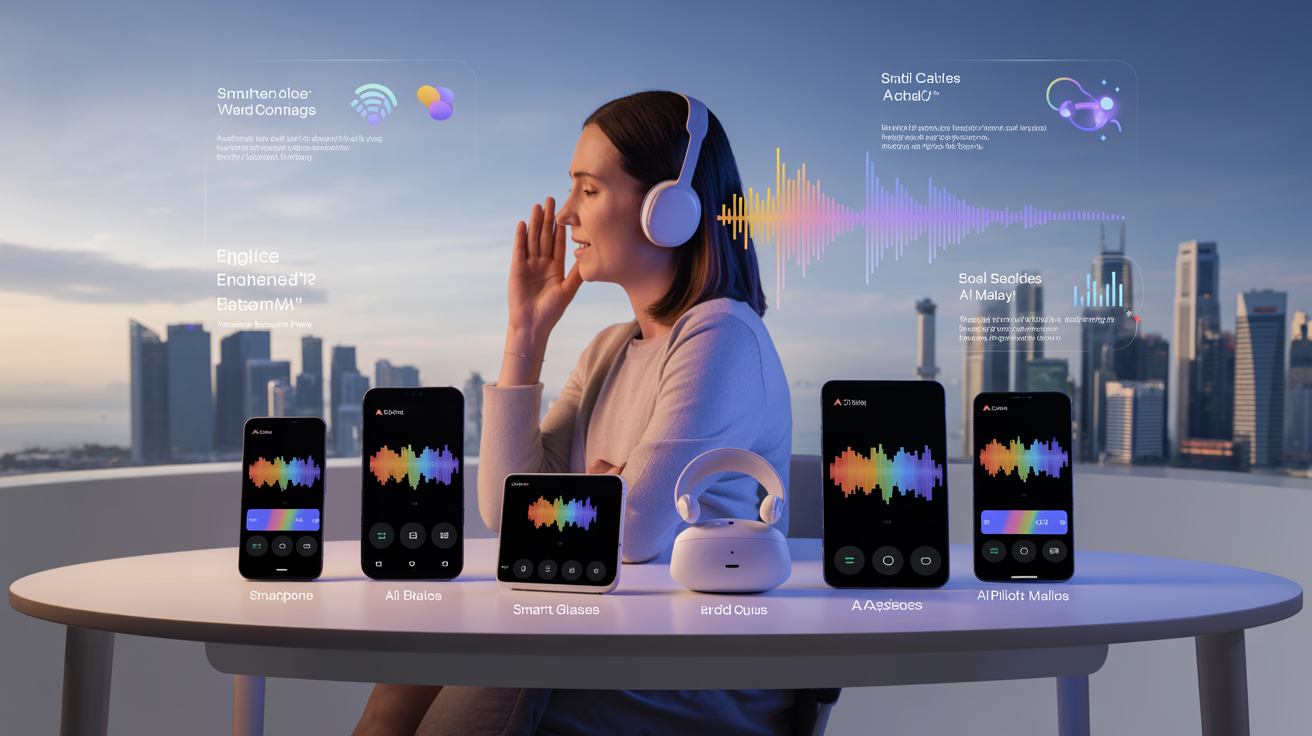
Press record and speak naturally. Don't worry about structure — just get your ideas out. AI voice recognition captures up to 400 characters/minute at 98% accuracy.
💡 Say structural cues like "key point" or "action item" to help AI prioritize your content.
🧠 AI Structures Your Content
The macro fires. AI reads your transcript, identifies themes, separates main points from details, and builds a logical presentation narrative — in seconds, not 45 minutes.
💡 Give context first: "This is a Q3 status update for the leadership team" sets the right tone.
🎨 Generate & Polish Slides
AI selects layouts, applies consistent design themes, formats visual hierarchy, and even generates speaker notes. A design-quality deck ready in ~30 seconds.
💡 Spend just 5 minutes adding personal anecdotes — that's your 10% human magic.
By the Numbers
Who Benefits Most?
🏫 Educators & Teachers
- Eliminate Sunday evening slide-building dread
- Walk a corridor, record lesson ideas on the go
- Arrive Monday with a polished deck ready
- Reduce burnout from repetitive formatting work
💼 Working Professionals
- Convert meeting notes → client decks instantly
- Weekly status updates in minutes, not hours
- Focus energy on strategy, not slide mechanics
- Smart Meeting Notes captures decisions in real time
🌐 Non-Native English Speakers
- Speak in your native language comfortably
- AI transcribes, translates & generates in English
- Removes extra cognitive load of dual-language work
- Supports language skill development simultaneously
5 Pro Tips for Best Results
Give AI Context First
State your purpose and audience before recording — e.g. "Q3 update for leadership team."
Use Anchor Phrases
Say "the main point here is" or "to summarize" to signal headline-worthy content to the AI.
Start with One Use Case
Pick one recurring task — weekly update or lesson recap — master it, then expand your macros.
Add Your Human Layer
Let AI handle 90%. Spend 5 minutes adding nuance, personal stories & context only you can provide.
Iterate Your Macros
AI-powered macros improve with use. Tune your speech patterns and the system learns over time.
The Bottom Line
Voice notes + AI macros = your morning walk idea becomes a polished deck before your first meeting. The gap between a great idea and a great presentation has never been smaller.
Powered by AIPILOT — intelligent tools that remove friction from learning and communicating, so you focus on what actually matters.
Why Voice Notes Are the Smartest Way to Start
Let's be honest: most of our best ideas don't arrive while we're sitting at a desk, fingers poised over a keyboard. They show up during a commute, mid-conversation, or right after a meeting when the energy is still fresh. Voice notes are the natural response to that reality. You speak at roughly three times the speed you type, which means your ideas hit the page faster and with far less mental friction.
The challenge has always been what comes next. Traditionally, a voice note was a dead-end — a file you'd replay later, furiously type from, and then wrestle into some kind of structured format. That manual transcription step is where most of the time (and enthusiasm) gets lost. Fortunately, modern AI has closed that gap in a dramatic way. Tools today can not only transcribe voice accurately, but also understand context, extract key points, and organize information into something genuinely useful — all without you lifting a finger beyond the initial recording.
What Are Productivity Macros (and Why Should You Care)?
If the word "macro" makes you think of complicated code and IT departments, take a breath — it's much friendlier than it sounds. At its simplest, a productivity macro is a pre-programmed sequence of actions triggered by a single command. Instead of performing five steps manually, you do one thing and the macro handles the rest. Think of it like setting up a domino chain: you knock over the first one, and the rest fall perfectly into place on their own.
In the world of AI-powered tools, macros have evolved well beyond simple keystroke recording. AI-powered macros adapt to context, understand natural language, and perform complex operations across multiple applications — all from a single trigger. This is why the combination of voice input and smart macros is so powerful: you speak your raw ideas, a macro fires, and a chain of intelligent actions transforms that speech into something ready to present. No intermediate steps, no app-switching, no formatting headaches.
The productivity gains are real and measurable. When repetitive tasks like formatting slides, structuring content, and applying design themes are handled automatically, you reclaim the mental energy and time to focus on what actually matters: the substance of your ideas and how you communicate them to your audience.
The 3-Click Workflow: Voice-Notes to Slides, Explained
Here's the practical core of this entire approach. You don't need a PhD in automation or a team of developers to set this up. You need the right tools and a clear understanding of how each step connects. Let's walk through it.
Click 1 — Capture Your Voice Note
This is where everything begins. Press record — whether that's on an AI voice recorder, a dedicated button on your AI mouse, or a voice-to-text app — and just talk. Don't worry about structure or perfect wording at this stage. Describe your idea, recap the key points from that meeting, or walk through the lesson plan you've been mentally drafting for the past hour. The whole point is to get your thinking out of your head and into a format the AI can work with.
Modern voice-to-text tools have become remarkably accurate. Recognition accuracy of up to 98% means your words land on the page almost exactly as you said them, even when you're speaking at a comfortable pace. Some AI-powered devices can input around 400 characters per minute through voice alone — significantly faster than average typing speed. The transcript you get at the end of this step isn't just a transcription; it's the raw material your AI engine needs to build something great.
- Tip: Speak in natural, connected thoughts rather than isolated words — AI handles full sentences better than fragmented dictation.
- Tip: You can use structural cues in your speech, such as saying "key point" or "action item," to help AI tools identify what matters most.
- Tip: A quiet environment improves transcription accuracy, though modern AI handles background noise significantly better than older tools.
Click 2 — Let AI Structure Your Content
This is the click that used to require a human brain, a cup of coffee, and about forty-five minutes. Once your voice note is transcribed, a well-configured AI macro takes over and performs the most cognitively demanding part of the process: making sense of your ideas. The AI reads through your transcript, identifies the core themes, separates main points from supporting details, and builds a logical narrative structure — the kind of thing a skilled editor would do, but in seconds.
Good AI tools don't just dump your text into bullet points. They perform what's essentially a semantic analysis of your content, recognizing which ideas belong together, which points should anchor a slide, and what the overall arc of your presentation should look like. The result is a structured outline that respects the intent behind your original words. Whether you were recapping a project update, pitching a new idea, or planning a lesson on vocabulary development, the AI maps your raw voice content to a presentation framework that fits the purpose.
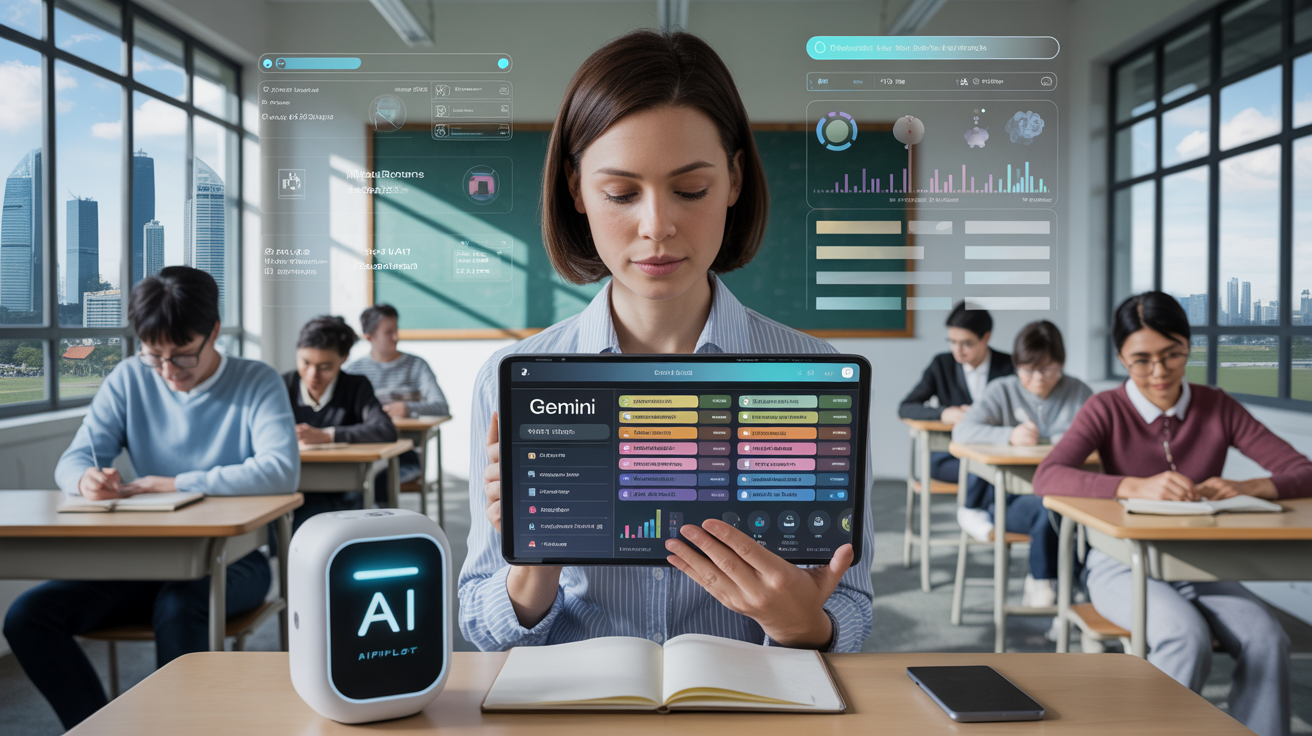
This step is also where a lot of the "magic" lives for educators specifically. Teachers often have a wealth of knowledge and ideas about a topic but struggle to organize it into a clean, lesson-ready format under time pressure. Having an AI layer that handles the structural scaffolding — automatically — is a genuinely transformative experience. It's the difference between spending a Sunday evening building slides from scratch and arriving Monday morning with a polished deck already done.
Click 3 — Generate and Polish Your Slides
With your content structured and organized, the final click sends it to an AI presentation generator. This is where the visual work happens. The AI selects appropriate layouts, applies consistent design themes, formats text with proper visual hierarchy, and populates each slide with the content from your outline. The end result looks like something a design-savvy colleague spent an afternoon on — except it took about thirty seconds.
The best AI presentation tools today don't use generic, tired templates. They apply smart formatting principles: bolding the right headers, balancing text and white space, ensuring the most critical information on each slide is visually prominent, and maintaining a consistent brand feel throughout the deck. Some tools even generate speaker notes alongside the slides, so you're not just getting a visual deck — you're getting a full presentation package ready for delivery.
The beauty of the 3-click model is that it doesn't remove you from the process entirely. You still bring the ideas, the insight, and the creative direction. The AI handles the mechanical transformation so you can focus your remaining energy on the 10% that truly needs a human touch: the nuance, the personal anecdotes, and the specific context that only you can provide. That final review and light customization pass is where your personality comes back in — and it usually takes about five minutes rather than two hours.
The AI Mouse Advantage: Your Macro Hub on Your Desk
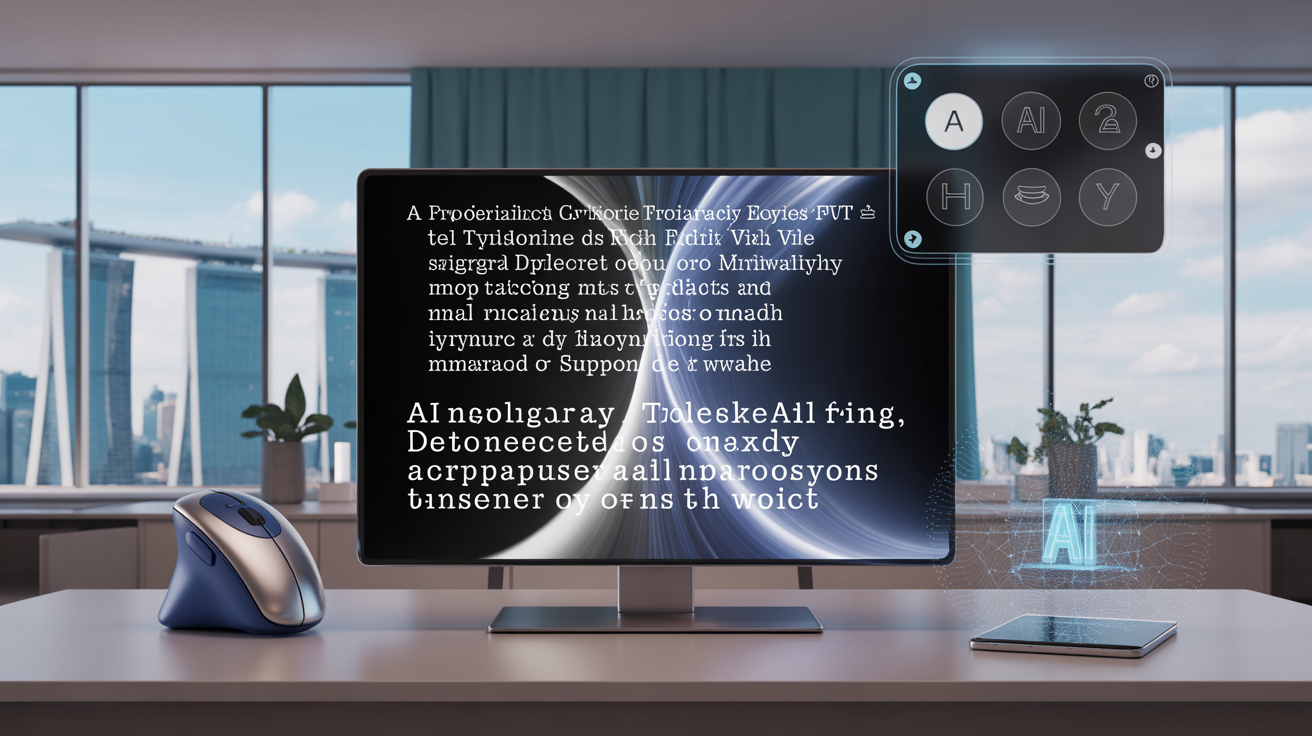
Now here's where AIPILOT's approach to productivity gets genuinely interesting. Most people think about workflow automation as a purely software-based thing — apps, platforms, browser extensions. But the physical layer of how you interact with your computer matters more than most people realize. This is exactly why the AIPILOT AI Mouse exists as a concept: it brings your macro triggers directly to your hand.
The AIPILOT AI Mouse combines the basic functions of a traditional mouse with advanced AI technology, supporting speech recognition, AI writing, online translation, and PPT production from a single device. With a dedicated voice button built right into the hardware, capturing a voice note becomes a literal one-tap action — no need to switch apps, open a recording interface, or type a single character. You tap the voice button, speak your idea, and the macro chain begins. It's the kind of seamless integration that makes the difference between a workflow you actually use every day and one that sounds great in theory but adds friction in practice.
What makes this hardware-software integration especially compelling for the voice-to-slides workflow is the Smart Meeting Notes macro capability. During virtual meetings or brainstorming sessions, you can activate a single-click transcription function that captures the conversation in real time, simultaneously identifying key points, action items, decisions, and deadlines — all while you stay fully present in the discussion. Once the meeting ends, the structured notes are ready to feed directly into the presentation generation step. The whole pipeline flows without a single manual copy-paste.
The AIPILOT ecosystem also connects naturally with its other learning and communication tools. For educators working within the AIPILOT platform, the AI Mouse integrates with tools like TalkiCardo — Smart AI Chat Cards for Kids, creating a cohesive environment where the same device that helps a teacher build tomorrow's lesson slides also supports a child's interactive language practice. That kind of connected, ecosystem thinking is what separates genuinely useful AI tools from gadgets that solve only one narrow problem.
Why This Workflow Is a Game-Changer for Educators and Professionals
The voice-to-slides pipeline isn't equally useful for everyone. It's particularly transformative for two groups of people: educators and knowledge workers who present regularly. Both groups share a common challenge — they have deep expertise and valuable ideas, but the production of presentation materials consistently eats into the time they'd rather spend on actual teaching, coaching, or strategic thinking.
For teachers, the weekly slide-building grind is a well-known source of burnout. Lesson prep time is already stretched thin, and the formatting work that goes into a decent-looking deck often feels like busywork that has nothing to do with actual pedagogy. When a teacher can walk through a corridor, record a five-minute voice note summarizing what they want to cover in Thursday's class, and arrive at their desk to find a presentation outline already structured and ready to review, that's a meaningful change in how their day feels. The mental load of production is lifted, and the focus can return to the craft of teaching.
For working professionals — project managers, consultants, sales teams — the same logic applies at scale. A weekly status update, a client proposal, a project review: each of these typically involves a conversion from meeting notes or mental summaries into presentation format. AI workflow automation handles tasks that previously required human judgment, enabling professionals to spend their energy on higher-value decisions rather than slide mechanics. The numbers back this up: workflow automation is a rapidly growing priority, with the majority of large enterprises now implementing strategies that combine multiple AI tools to eliminate repetitive manual work.
There's also an important language dimension here that's particularly relevant for AIPILOT's audience. For non-native English speakers, the voice-to-slides workflow removes an extra layer of effort. Speaking in one's more comfortable language, having AI transcribe and translate, and then generating a presentation in a target language is a powerful use case that supports both productivity and language skill development simultaneously.
Pro Tips for Getting the Best Results
Getting good outputs from a voice-to-slides workflow is largely about setting the AI up for success from the very first step. A few smart habits make a noticeable difference in the quality of your final presentation.
- Give the AI context before you begin. Before recording your voice note, briefly state the purpose and audience. Something like "This is a five-minute summary of our Q3 project status for the leadership team" gives the AI the framing it needs to choose the right structure and tone for your slides.
- Use anchor phrases in your speech. Saying words like "the main point here is" or "to summarize" helps AI tools identify what should become headline content on a slide versus supporting detail.
- Start with a single, focused use case. Don't try to automate a complex 20-step workflow on your first attempt. Pick one recurring task — like your weekly team update or your standard lesson recap — and build your macro around that. Once it's working smoothly, expand from there.
- Review and add your human layer. Let the AI do the structural 90%, then spend five focused minutes adding the specific nuances, personal examples, or confidential context that only you can provide. This is what makes an AI-generated deck feel genuinely yours.
- Iterate on your macros. AI-powered macros improve with use and benefit from periodic tuning. If certain phrases in your voice notes consistently confuse the structure, adjust how you speak them. The system learns your patterns over time and becomes more accurate the more you use it.
One final thought worth keeping in mind: this workflow is not about removing the human from the process. It's about removing the mechanical parts so the human can do more of what only humans do well — think creatively, communicate with empathy, and make the kind of judgment calls that no algorithm can replicate. The AI is your most efficient production partner. You're still the one with the ideas worth presenting.
Conclusion
The gap between a great idea and a great presentation has never been smaller. With the right productivity macros in place, a voice note captured on your morning walk can become a polished, professional slide deck before your first meeting of the day. That's not a distant future scenario — it's a workflow that educators, trainers, and working professionals are building right now using AI tools that are already available.
AIPILOT's vision sits right at the heart of this shift: using intelligent tools to remove friction from the hard work of learning and communicating, so people can spend more time on the things that actually matter. Whether you're a teacher preparing tomorrow's lesson, a professional recapping a client meeting, or a student organizing lecture notes into a study presentation, the 3-click workflow from voice to slides is one of the most practical upgrades you can make to your daily routine. Give it a try — your future self (and your presentation slides) will thank you.
Ready to Supercharge Your Productivity with AI?
Explore AIPILOT's full ecosystem of smart AI tools — from the AI Mouse to language learning companions — and discover how intelligent technology can transform the way you work, teach, and communicate.
Explore AIPILOT Today