Language Translator Devices Compared: Which One Is Right for Travel and Business?
Posted by Aipilot on
Picture this: you've just landed in Tokyo, your phone battery is at 12%, the airport Wi-Fi is a polite fiction, and a kind local is trying to give you directions you absolutely cannot follow. Sound familiar? Language barriers have a talent for showing up at the worst possible moment — whether you're navigating a foreign train station, closing a deal with an international client, or simply trying to order a meal without accidentally asking for the spicy one.
The good news is that language translator devices have never been smarter, faster, or more travel-friendly than they are right now. The global language translation device market was valued at USD 1.9 billion in 2025, and it's growing rapidly as AI-powered tools become genuinely useful tools for everyday travelers, business professionals, and multilingual families alike. But with handheld translators, AI earbuds, wearable glasses, and phone apps all competing for your attention (and wallet), figuring out which one suits you best can feel like its own kind of language barrier.
This guide cuts through the noise. We compare the main types of language translator devices, break down the features that actually matter, and match the right tool to your specific situation — whether you're a solo backpacker, a frequent-flyer executive, or a parent looking for smart ways to help your kids connect across languages.
Language Translator Devices Compared
Which one is right for your travel or business needs? Here's everything you need to know.
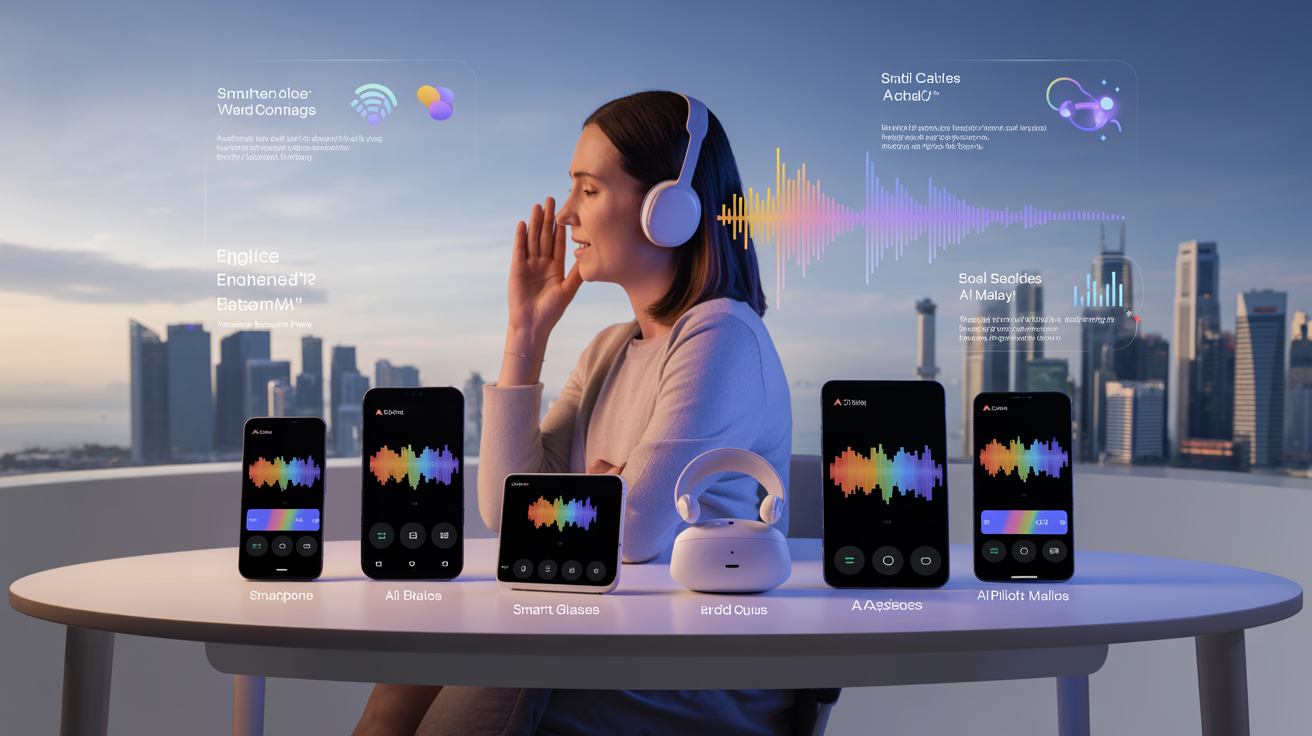
📱 The 4 Main Types of Translator Devices
Choose the form factor that fits your lifestyle first.
Handheld Device
Most versatile. Voice, photo & text translation. Best offline capability.
Translator Earbuds
Hands-free & discreet. Real-time two-way. Best in quieter environments.
Wearable / Smart Glasses
Translation in your line of sight. No hands, no ears. Emerging category.
Translation App
Most affordable. Continuously updated AI. Best for casual, connected use.
🔎 6 Features That Actually Matter
Don't get distracted by "144 languages" claims — focus on these.
Offline Capability
Verify your top 5 languages work fully offline — not just as downloadable packs.
AI Engine Quality
Premium devices use neural machine translation (NMT) — not word-for-word.
Microphone Quality
Dual mics with adaptive noise cancellation. Critical for airports & markets.
Real Battery Life
Active use = 30–50% less than rated. Aim for 8+ hrs of continuous translation.
Photo / OCR Translation
Point-and-translate menus, signs, and documents. Essential for non-Latin scripts.
No Hidden Subscriptions
Core functions — offline languages, photo translation, voice — should be built in.
🎯 Match Your Device to Your Situation
Frequent International Traveler
→ Handheld with built-in eSIM data (e.g., Vasco V4, Pocketalk Plus). Offline capability + no SIM swapping hassle across 190+ countries.
Business Professional
→ Premium handheld or software integration (e.g., iFLYTEK, Transync AI). Meeting recording, HIPAA privacy, and industry-specific accuracy matter most.
Face-to-Face Conversationalist
→ Translator Earbuds (e.g., Timekettle WT2 Edge, ANFIER M3). Both speakers wear one earbud — natural conversation flow, no screen required.
Casual Traveler / City Explorer
→ Translation App (Google Translate, Apple Translate). Free, continuously updated, sufficient for stable Wi-Fi urban environments.
Families & Multilingual Learners
→ Translator device + AI language learning tool. Devices bridge today's conversation; learning tools build tomorrow's fluency — especially powerful for kids.
💡 5-Minute Buying Checklist
Run through these before adding anything to your cart.
List your top 5 languages and confirm each works fully offline — not just with a cloud connection.
Match the form factor to your situation — handheld for versatility, earbuds for hands-free, app for low-stakes use.
Check active battery life — rated specs reflect standby. Expect 30–50% less under real use.
Watch for hidden subscriptions — offline languages, photo translation, and voice should come included, not as add-ons.
Read reviews for your specific language pair — a device great for Spanish-English can underperform for Thai-English or Arabic-English.
⚖️ Dedicated Device vs. App: The Verdict
🔡 Dedicated Device Wins
- No battery competition from other apps
- Works in remote, low-connectivity areas
- Built-in modes for live calls & meetings
- Better privacy for sensitive conversations
- Single-purpose = faster, simpler workflow
📱 App Wins
- Zero upfront cost
- Continuously updated AI models
- Perfect for casual, city-based travel
- Always in your pocket already
- Strong for text & occasional translation
💡 Sweet Spot Rule: Choose a dedicated device if you travel internationally 3–4+ times per year, need offline capability, or handle high-stakes conversations. Stick with an app for occasional, text-based, or well-connected urban use.
🌟 Translation Bridges Today. Learning Builds Tomorrow.
Real-time translation handles the conversation in front of you. AI-powered language learning works to close the language gap over time — building the kind of connection no device can replicate on its own.
Translator Device
Bridges the language gap right now. Essential for travel and business conversations today.
AI Language Learning
Closes the language gap over time. Personalized practice that turns exposure into fluency.
Powered by AIPILOT
Ready to go beyond real-time translation?
AIPILOT combines intelligent AI tools with personalized language learning — helping students, professionals, and families break through language barriers for good.
Explore AIPILOT Language Solutions →Why a Dedicated Translator Device (and Not Just Your Phone)?
It's a fair question. Most of us already carry a smartphone loaded with Google Translate, so why invest in a separate gadget? The honest answer is: it depends on how serious your translation needs are. For a quick café order in Paris, your phone works fine. But for extended travel through multiple countries, daily international business calls, or sensitive professional conversations, a dedicated device starts to look a lot more appealing.
Dedicated language translator devices are engineered from the ground up for one job: translation. They feature better microphones tuned for noisy environments, dedicated neural processing chips that reduce latency, and batteries optimized for all-day use rather than split across maps, email, and social media. Many modern mid-tier devices deliver real-time latency well under one second, making turn-taking in conversation feel genuinely natural. They also sidestep a surprisingly common frustration: the unlock-open-grant-mic-access-then-wait routine that makes spontaneous use of a phone app feel clunky in fast-moving situations.
Privacy is another underappreciated benefit, especially for business users. Standalone devices generally process voice locally or through dedicated servers, rather than routing conversations through third-party app ecosystems. And for professionals handling sensitive discussions — legal negotiations, medical consultations, confidential client meetings — that distinction matters more than any spec sheet will tell you.
The Main Types of Language Translator Devices
Not all translator devices look the same, and understanding the form factor is the first step toward finding one that actually fits your life.
Handheld Translator Devices
These are standalone units — think of a slim smartphone-sized device dedicated entirely to translation. Brands like Timekettle, Pocketalk, Vasco, and iFLYTEK dominate this space. Handheld translators typically feature touchscreens, physical buttons, built-in speakers, and the widest range of offline language packs. They're the most versatile all-rounders, supporting voice, photo (OCR for menus and signage), and text translation in a single package. If you want reliability, offline capability, and an easy learning curve for people of any age, a handheld device is your safest bet.
Translator Earbuds
Earbuds that translate in real time have quietly become one of the most popular options on the market, especially for travelers who value hands-free, low-profile communication. Devices like the Timekettle WT2 Edge, ANFIER A9, and various SANSUI models let both speakers engage naturally without passing a gadget back and forth. The best ones feature environmental noise cancellation, support for dozens of languages, and seamless switching between translation and regular audio. The trade-off is that most require a companion app and work best in quieter environments — a noisy marketplace or a busy airport gate can challenge even the top earbuds.
Wearable and Hybrid Devices
A newer category is emerging at the intersection of fashion and function. Smart glasses like the Solos AirGo 3 bring AI-powered translation directly into your line of sight, supporting real-time translation in 25 languages with built-in voice assistance — without anything in your ears or in your hands. There are also phone-attachment translators, like the InnAIOT T9, which magnetically clip to your smartphone and overlay translations during voice calls, video calls, and messaging apps. These hybrid options are ideal for minimalist travelers who want to avoid carrying an extra device but need more translation capability than a standard app provides.
Key Features to Look For Before You Buy
Marketing materials love to list "144 languages" in bold, but raw language count is rarely the most important factor in real-world use. Here are the features that will actually determine whether your translator earns its place in your bag.
- Offline capability (verified, not just listed): Internet access is never guaranteed when you need it most. Before buying, confirm which specific languages work fully offline — not just as downloadable packs that still require cloud processing. Over 60% of user-reported failures with translator devices happen due to unexpected connectivity loss, not device malfunction. Prioritize offline coverage for your top five languages above all else.
- Translation accuracy and AI engine quality: Older tools translated word-for-word, missing idioms, slang, and context entirely. Modern AI-powered devices use neural machine translation (NMT) that understands intent, not just individual words. Premium devices often tap multiple translation engines simultaneously, intelligently selecting the best one for a given language pair (for example, DeepL for European languages, specialized engines for East Asian ones). Budget models usually rely on a single free-tier engine, which shows in accuracy for longer or nuanced sentences.
- Microphone quality and noise handling: A translator with a mediocre microphone is like a GPS with a blurry map. Look for dual-microphone setups with adaptive noise cancellation, especially if you'll be using it in airports, markets, or street-level environments. Side-mounted mics generally outperform front-facing ones for outdoor use.
- Battery life (real-world, not rated): A device rated for "10 hours" typically delivers 5 to 7 hours under active translation with the screen on. Look for models offering at least 8 hours of continuous use and check whether the battery covers active translation or just standby. For business travelers on full-day schedules, this distinction is critical.
- Ease of use: The best translator device is the one you actually use. A confusing interface is a dealbreaker when you need to communicate quickly. Look for simple button controls, responsive touchscreens, and minimal setup. Many top devices now allow language switching in under two seconds.
- Photo and text translation: Being able to point your device at a restaurant menu, a street sign, or a printed document and get an instant translation is enormously practical. OCR (optical character recognition) camera translation is worth prioritizing, especially for travel in countries with non-Latin scripts like Japanese, Arabic, or Thai.
- Subscription model awareness: Some devices lock core features — including offline languages or photo translation — behind ongoing subscriptions. Ensure that standalone functionality is built in, not an add-on premium.
Top Translator Device Picks for Travelers
Travel scenarios reward devices that are fast, reliable, and ready to work the moment you need them — ideally without requiring stable Wi-Fi to function. Here are the form factors and devices worth considering.
Best for Standalone Reliability: Handheld Devices with Built-in Data
For travelers visiting multiple countries without wanting to juggle SIM cards or hotspots, handheld devices with built-in eSIM data plans are the most hassle-free option. The Timekettle T1 series and Vasco Translator V4 are standout examples in this category. The Vasco V4 is particularly notable for its lifetime free global internet coverage across nearly 200 countries — no roaming fees, no SIM swapping. It supports voice, photo, and text translation and earns consistent praise for its intuitive interface that anyone can pick up and use immediately. The Pocketalk Plus series offers similarly reliable performance, with a large touchscreen and strong speech recognition that holds up well in noisy environments like airports and hotels.
Best for Hands-Free Conversations: Translation Earbuds
If you want to have a two-way conversation without breaking eye contact to look at a screen, earbuds are the way to go. The Timekettle WT2 Edge remains a top choice for in-person, simultaneous translation — each speaker wears one earbud, and the conversation flows naturally without pausing to pass a device. For budget-conscious travelers, the ANFIER M3 packs impressive versatility: 144 language and accent support, lifetime free offline translation for eight major languages, and five smart translation modes including photo translation. It doubles as regular earbuds for music and calls when you're off the clock.
Best Budget Option: Entry-Level Handheld
Not every traveler needs professional-grade hardware. Entry-level handheld devices from brands like GANODS and Birgus offer serviceable translation across 100-plus languages via Wi-Fi or a phone hotspot, with large touchscreens and photo translation thrown in. They're not ideal for remote areas without connectivity, but for city-based travel in well-connected regions, they deliver solid value at a fraction of the cost of premium models.
Best Translator Devices for Business Professionals
Business translation demands a different kind of reliability. A missed word in a casual tourist conversation is an inconvenience; a missed word in a contract negotiation or a client presentation is a much bigger problem. Business users should prioritize accuracy on industry-specific terminology, discreet form factors, and features built for professional meeting environments.
The iFLYTEK Smart Translator stands out for professional use, backed by 25 years of speech recognition development and built to handle complex conversations in legal, medical, and corporate settings. It supports HIPAA-certified privacy protection, which matters in regulated industries, and combines 60 online and 18 offline language pairs with built-in noise cancellation for clear audio even in busy conference rooms. It also records and transcribes meetings, making it a two-in-one tool for multilingual professionals who need documentation alongside translation.
For remote and hybrid teams conducting international video calls, software-based tools like Transync AI or Microsoft Translator integrate directly into platforms like Zoom, Teams, and Webex, offering real-time bilingual captions with near-zero latency. These are especially practical when the translation need is primarily for meetings rather than in-person travel. Some premium earbuds, like the SANSUI AI Translation Earbuds with Bluetooth 6.0 and integrated Deepseek AI, also cater to business professionals who want an all-in-one device that handles translation, calls, and meeting recording in a single wearable.
Dedicated Device vs. Translation App: Which Wins?
This is the question at the heart of every translator purchase decision. The honest answer is that there is no universal winner — it depends entirely on your usage pattern, travel frequency, and tolerance for trade-offs.
A dedicated translation device wins on reliability and focus. It has no other apps competing for battery life or processing power. You turn it on, pick your languages, and start talking. That single-purpose simplicity is a genuine advantage in fast-moving or high-stakes situations where fumbling with a phone is not an option. Dedicated devices also handle remote communication better — standard translation apps struggle to translate a live phone call or Zoom meeting, while purpose-built tools include dedicated modes for exactly those scenarios.
Translation apps win on convenience and cost. Free apps like Google Translate (now backed by Gemini AI models for smoother conversation flow) and Apple Translate are genuinely capable for casual use, ordering food, or asking for directions. Apps also update continuously, meaning their AI models get smarter over time — a piece of hardware, by contrast, is largely static from the day you buy it. For business professionals in well-connected cities who primarily need translation during meetings with internet access, a capable app paired with quality earbuds can match much of what a dedicated device offers at far lower cost.
The sweet spot for most users: consider a dedicated device if you travel internationally more than three or four times per year, operate in areas with unreliable connectivity, or regularly conduct high-stakes conversations where accuracy and privacy are non-negotiable. Stick with a good app if your translation needs are occasional, primarily text-based, or centered around stable urban Wi-Fi environments.
Beyond Translation: When Language Learning Matters More
Real-time translation solves the immediate problem — getting through a conversation right now. But for people who work or travel internationally on a regular basis, there's a longer game worth playing: actually learning the language. Understanding the basics of a client's native tongue, or being able to hold a simple conversation with a host family, creates a depth of connection that no translation device can replicate on its own.
This is where AI-powered language learning tools offer something fundamentally different from translation hardware. Rather than bridging a gap in the moment, they work to close the gap over time through personalized practice, real-conversation simulation, and adaptive feedback. For parents raising globally minded kids, this distinction is especially meaningful. Translator devices make today's conversation possible. Language learning tools make tomorrow's conversation natural.
For younger learners especially, engaging AI-powered tools that combine communication with genuine language practice can make a real difference. AIPILOT's TalkiCardo Smart AI Chat Cards are a great example — designed to help kids build real communication skills through safe, guided AI interaction rather than passive translation. It's the kind of tool that complements a family's translator device by turning language exposure into language learning, one conversation at a time.
Quick Buying Tips Before You Decide
Before you add a translator device to your cart, run through these practical checkpoints. They take five minutes and will save you from buyer's remorse.
- List your top five languages first. Confirm that offline support exists for all of them — not just online. If a critical language only works with a cloud connection, that device loses half its value the moment you land somewhere with poor signal.
- Match the form factor to your situation. Handheld devices suit general travel and multi-scenario use. Earbuds suit hands-free, face-to-face conversations. App-based tools suit digital meetings and low-stakes travel. Don't buy earbuds if you mostly need to scan menus, and don't buy a handheld if you want discrete, in-ear translation during live conversations.
- Check battery life under active use, not standby. Manufacturer claims often reflect standby time. Under active translation, real-world battery life is typically 30 to 50 percent lower than rated specs.
- Watch for hidden subscription costs. Some devices seem affordable at purchase but gate offline languages, photo translation, or even full voice features behind monthly fees. Make sure core functions are included out of the box.
- Read real user reviews for your specific language pair. A device rated excellent for Spanish-English may perform significantly worse for Thai-English or Arabic-English. Seek out reviews from users who work with the same language combinations you need.
- Think about the long game. If your goal is genuine communication — building relationships, growing professionally, or raising multilingual children — pair your translator device with a language learning tool that builds real fluency over time, not just real-time bridges.
The Right Translator for the Right Moment
Language translator devices have come a long way from the clunky phrase-lookup machines of a decade ago. Today's AI-powered options — whether a handheld device, smart earbuds, or a sophisticated app — can handle real conversations, noisy environments, and even offline travel with impressive reliability. The global market is growing fast for a reason: these tools genuinely work, and they work in ways that feel increasingly natural.
The key is matching the tool to your actual life. Frequent international travelers benefit most from a standalone device with solid offline capability and built-in data. Business professionals often need the accuracy and meeting-room features that premium handhelds or integration tools provide. Casual travelers and occasional users can go a long way with a well-chosen app. And for families or educators thinking about language development over the long term, pairing a translation tool with an AI-powered learning experience creates something far more powerful than real-time translation alone.
Whatever you choose, the goal is the same: fewer awkward silences, more genuine connections, and a little more confidence every time you step into a conversation in a language that isn't your first.
Ready to Go Beyond Translation?
Real-time translation handles today's conversation. AI-powered language learning builds the confidence for every conversation after that. AIPILOT combines intelligent AI tools with personalized, supportive learning experiences — helping students, professionals, and families break through language barriers for good.
Explore AIPILOT's Language Learning Solutions →