Real-Time Translation Devices: How Low Can Latency Really Go?
Posted by Aipilot on
Picture this: you're mid-conversation with someone who speaks a different language. You say something, and a tiny device in your ear translates it for them — not in five awkward seconds, but almost as the words leave your mouth. That's the dream of real-time translation. And thanks to AI, it's less of a dream and more of an engineering race to see just how close to instantaneous we can get.
Translation latency — the gap between what you say and what your listener hears in their language — has gone from a clunky 5-second delay to under a single second in the best modern systems. But how does that happen? What's actually going on inside those tiny devices and cloud pipelines? And more importantly, what does it mean for real people having real conversations — including students, educators, and language learners?
In this article, we'll unpack exactly where latency comes from, how the latest AI techniques are squeezing it down, and why breaking the 1-second barrier changes everything about how humans communicate across languages. Whether you're a curious parent, a classroom educator, or just someone amazed by the technology in your pocket, this one's for you.
Real-Time Translation Devices:
How Low Can Latency Really Go?
From 5-second delays to under 1 second — here's what's inside the pipeline driving the future of live translation.
The best modern AI translation systems now beat professional human interpreters — who average 3–5 seconds — by a wide margin.
⚡ The Latency Thresholds That Make or Break a Conversation
Not all delays feel the same — here's what each threshold means in practice.
🔬 Inside the Translation Pipeline
Latency accumulates across 5 distinct stages — every millisecond counts.
🏗️ Two Architectures, One Goal
Cascaded vs. End-to-End — different philosophies, both racing toward zero latency.
Cascaded Pipeline
End-to-End Model
📡 On-Device vs. Cloud: The Speed Equation
Where the AI runs dramatically shapes how fast translation arrives.
On-Device Processing
- ✓ Zero network round-trip latency
- ✓ Audio stays private on-device
- ✗ Fewer supported languages
Cloud-Based Processing
- ✓ 100+ language pairs supported
- ✓ Larger, more accurate AI models
- ✗ Requires reliable connectivity
🎯 Latency Tolerance by Use Case
Context is everything — the same delay can feel fine or catastrophic depending on the setting.
🧠 Why Latency Transforms Language Learning
Speed isn't just technical — it's the difference between immersion and frustration for learners of all ages.
Engagement & Immersion
A slow AI response breaks the immersive experience that makes language acquisition stick. Under 800ms keeps learners in the moment — building real conversational confidence, not waiting anxiety.
Instant Feedback Loop
Pronunciation and grammar corrections delivered the moment a word leaves the learner's mouth help develop accurate accents naturally — something a single teacher in a class of 30 can rarely deliver.
Psychological Safety
A judgment-free AI partner that responds naturally lowers anxiety barriers — especially for children. The technology is available 24/7, as patient as needed, and never makes learners feel embarrassed.
Translation + Learning = Complementary
Translation removes barriers so communication can happen now; conversational AI builds lasting fluency over time. The smartest educational approach uses both together — understanding first, mastery next.
💡 5 Key Takeaways
Latency has dropped from 5 seconds → under 1 second — the best streaming systems hit 300ms and below.
800ms is the magic line — below it, conversations feel natural; above it, the rhythm of turn-taking breaks down.
Speed comes from streaming architecture + model compression + on-device processing — no single breakthrough, but continuous compounding gains.
The hybrid model wins for real-world use — on-device ASR for speed, cloud NMT for language breadth.
Fast AI translation isn't just a communication tool — it's the engine of a new era in language learning, especially for children learning in immersive, low-pressure environments.
Experience AI Language Learning That Keeps Up With You
Low-latency AI conversation tools for kids, educators, and lifelong learners — making language practice feel like real conversation, not homework.
Explore AIPILOT Solutions →What Is Translation Latency — and Why Should You Care?
Translation latency is simply the time between a speaker finishing a word or phrase and the listener receiving the translated version. In a vacuum, a couple of seconds sounds harmless enough. But in an actual back-and-forth conversation, that gap is the difference between a natural exchange and an awkward, stilted wait where everyone's not sure when to speak next.
Think of it like a kitchen relay race. One chef chops the vegetables, passes them to the next, who cooks them, then passes to the plating station. If any station slows down, the dish is late. Translation pipelines work the same way — and every stage in the chain adds time. The goal isn't just to make each stage fast; it's to make the whole relay feel smooth enough that nobody notices it's happening at all.
There's also an important distinction between actual latency (the raw millisecond count) and perceived latency (how that delay feels to a human). A 1.5-second pause during a university lecture? Barely noticeable. The same pause mid-negotiation or during a quick classroom Q&A? It completely disrupts the flow. Real-time translation systems have to optimize for both numbers — because a technically fast system that still feels slow has failed its most important test.
The Magic Numbers: Latency Thresholds That Make or Break a Conversation
Not all delays are created equal. Research and real-world deployment have given us a clear picture of where the meaningful thresholds sit. Below 800 milliseconds feels live to most listeners — it barely registers as a delay at all. Cross the 1-second mark and people start to notice. Push past 2 seconds and they begin talking over the translation. By the time you hit 4 seconds, the conversation is effectively broken.
For context, human simultaneous interpreters — the professionals in those glass booths at international summits — typically introduce a 3 to 5 second delay while they hear, process, and reproduce a phrase in another language. That's long been the benchmark AI systems aimed to match. Today's best AI systems don't just match it; they beat it by a wide margin.
Here's a quick breakdown of what different latency levels mean in practice:
- Under 500ms: Nearly transparent — the gold standard for live conversational use
- 500ms–800ms: Feels real-time to most participants; comfortable for two-way dialogue
- 800ms–2 seconds: Noticeable but workable — fine for presentations, lectures, or one-way streaming
- 2–4 seconds: Disruptive for conversation; borderline for passive listening contexts
- 4+ seconds: Breaks natural turn-taking; conversation feels forced and unnatural
The practical implication? The context matters as much as the number. A 3-second delay might be acceptable for an international conference keynote, but the same delay on a live classroom question would have students and teachers talking over each other in frustration.
Inside the Pipeline: Where Every Millisecond Goes
Latency doesn't appear from thin air — it accumulates across several distinct processing stages, each with its own minimum processing time. Understanding these stages is the key to understanding why some systems feel snappy while others feel like they're stuck in slow motion.
Stage 1: Audio Capture and Pre-Processing (50–150ms)
Before any AI sees the audio, it needs to be captured by a microphone, buffered, and cleaned up. Noise reduction, echo cancellation, and volume normalization all happen here. In quiet environments this is quick; in noisy classrooms or busy offices, more aggressive processing adds more time. Systems that skip pre-processing to save time often pay a heavy accuracy penalty downstream — garbage in, garbage out, as they say.
Stage 2: Automatic Speech Recognition (ASR) (150–500ms)
This is where spoken audio gets converted into text. Modern streaming ASR systems process audio in small chunks — typically 200 to 500 milliseconds of audio at a time — and produce partial transcript updates as each chunk arrives. The trade-off here is fundamental: smaller chunks mean faster partial outputs but less context, leading to more corrections as more audio arrives. Larger chunks produce more stable transcripts but introduce more delay. In practice, most production systems settle on a 300–400ms chunk size as the sweet spot. Leading streaming ASR engines like AssemblyAI Universal-3 achieve median latencies around 150ms, while others target under 300ms end-of-turn.
Stage 3: Neural Machine Translation (NMT) (100–400ms)
Once there's text, it needs to be translated. This is where transformer-based neural machine translation models do their work. Traditional sentence-level NMT had to wait for a complete sentence before translating — which adds the entire duration of the sentence to your latency budget, on top of everything else. Streaming NMT models translate at the phrase or clause level instead, producing progressive translations that get refined as more of the sentence arrives. The occasional correction this causes is a small price for the significant speed gains it delivers.
Stage 4: Text-to-Speech (TTS) Synthesis (100–300ms)
Translated text needs to be spoken before anyone hears it. Neural TTS synthesis typically adds 100 to 300 milliseconds depending on model size. The good news is that modern TTS engines like ElevenLabs, Azure Neural TTS, and Google Cloud TTS all support chunked synthesis — meaning they start emitting audio frames before the full translated text has even arrived, shaving precious time off the output stage.
Stage 5: Network Delivery (20–200ms)
Finally, the translated audio has to travel from wherever it was processed to whoever's listening. Local processing skips this almost entirely. Cloud-based systems add 20 to 100ms on a good connection, more on a congested network. Multi-hop architectures — where audio passes through multiple servers — can add several hundred milliseconds here alone. This is why geography and infrastructure matter more than most people realize.
How Modern Systems Slash Latency
The dramatic improvements in translation latency over the past few years haven't come from a single breakthrough — they've come from squeezing improvements out of every stage simultaneously. Here are the techniques making the biggest difference today.
Streaming architecture over batch processing: Old-school systems waited for a complete audio segment before doing anything. Streaming architectures start processing the instant audio begins arriving, running ASR, translation, and synthesis as a continuous pipeline where each stage feeds the next in real time. Every professional real-time translation system uses streaming architecture today — batch processing simply can't compete for live use.
Partial outputs and incremental translation: Instead of waiting for a complete thought, the AI translates what it has and updates as more words arrive. This technique produces sub-second latency — the translation can start appearing before you even finish your sentence. The listener hears the beginning of a translated sentence while the speaker is still completing it, creating a genuinely simultaneous experience.
On-device pre-processing: Offloading the noisy, latency-sensitive audio pre-processing stage to the local device — whether that's a smartphone, a smart earbud, or a dedicated hardware device — eliminates the network round-trip for that stage entirely. Clean, normalized audio then arrives at the ASR model ready for immediate inference, trimming 50 to 150ms from the pipeline before any AI work even begins.
Model compression and quantization: Smaller AI models run faster. Techniques like knowledge distillation, pruning, and quantization can reduce model size by 50 to 80% with minimal accuracy loss. Models that once required a server-grade GPU can now run on consumer hardware or compact cloud instances — delivering significantly lower latency without meaningful accuracy trade-offs.
Cascaded vs. End-to-End: Two Paths to Faster Translation
There are two main architectural approaches to real-time translation in 2026, and they represent genuinely different philosophies about how to balance speed, accuracy, and practicality.
The cascaded approach chains three separate specialized components: ASR converts speech to text, NMT translates the text, and TTS converts it back to speech. Each stage is a well-understood, battle-tested system. The cascaded pipeline is still the dominant choice in production because every stage is independently debuggable and the language coverage is vast. The downside is that latency and errors accumulate across the chain — each handoff adds time and each imperfection compounds.
The end-to-end approach uses a single neural model that translates directly from source speech to target speech or text, skipping the intermediate text representation entirely. End-to-end systems offer advantages in latency and model size, and they can preserve the speaker's voice and emotional tone in ways cascaded systems struggle with. The trade-off is that production-grade end-to-end systems still support a narrower range of language pairs, and they're harder to debug when something goes wrong.
In practical terms: reach for cascaded when you need broad language coverage, debuggability, or operate in regulated domains. Reach for end-to-end when latency must stay under 2 seconds and preserving the speaker's voice is central to the experience. For most everyday language learning and communication scenarios, well-optimized cascaded systems with streaming architecture hit the conversational sweet spot beautifully.
On-Device vs. Cloud: The New Frontier
For most of the past decade, real-time translation lived in the cloud. You'd speak into your phone, your words would travel to a data center, get processed, and come back — the round trip adding latency that was hard to eliminate. That's changing rapidly.
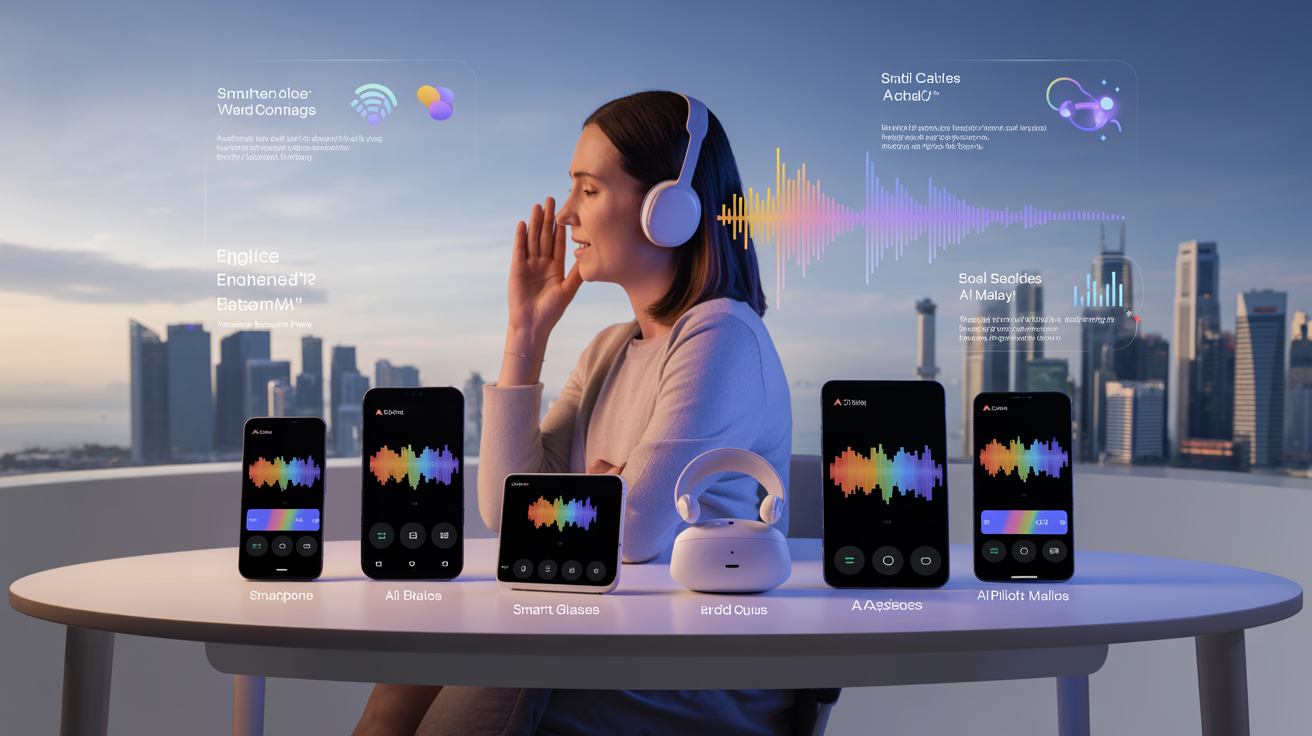
Specialized AI chips are now enabling translation directly on the device itself, with some implementations achieving latency under 200 milliseconds across 100+ languages. Apple's on-device translation (available since early 2026 for supported iPhones) processes conversations entirely locally with zero network latency — no data uploaded, no round trip required. The limitation is language coverage: on-device models are smaller, so they typically support fewer languages than cloud counterparts.
The sweet spot for most real-world applications is a hybrid approach: on-device pre-processing and ASR for the latency-sensitive early stages, with cloud-based NMT for the heavier translation work. This combination gets the best of both worlds — fast first response, broad language support, and resilience to poor network conditions. For language learning devices aimed at kids and educators, this hybrid model is particularly well-suited: it keeps sensitive audio local while still delivering the breadth of vocabulary and language support that learners need.
Where Latency Really Matters Most
Different conversations have different tolerance for delay. Understanding where the threshold falls in your specific context is just as important as knowing the raw millisecond numbers.
Live events and conferences have the most generous tolerance — audiences expect a slight lag from interpretation, so anything under 3 seconds is generally acceptable. Customer support calls and bilateral meetings are far more demanding; a 2-second delay in a support call feels disruptive, and a 4-second delay makes the whole exchange feel broken. Classroom conversations and educational Q&A sit somewhere in between — students can tolerate a brief pause, but back-and-forth dialogue (a student asking a question, a teacher responding) needs to stay well under 2 seconds to feel natural.
Live streaming adds an extra wrinkle: translated audio needs to stay synchronized with on-screen video. Most live platforms buffer 2 to 5 seconds of video, giving translation systems a workable window — but one that leaves little room for inefficiency in the pipeline.
The most demanding use case of all? Real-time conversation between two people — say, a parent and a teacher speaking different languages at a school meeting, or two students collaborating across a language gap. Back-and-forth discussions over 800 milliseconds disrupt the natural rhythm of turn-taking, with people talking over each other because they can't tell when the other person has finished. Below 800ms, conversations feel genuinely natural. That's the target that matters most for everyday human interaction.
What This Means for Language Learners (Yes, Including Kids)
Here's where things get genuinely exciting for educators and parents. Real-time translation technology isn't just changing how we communicate across language barriers — it's transforming how children and adults learn languages in the first place.
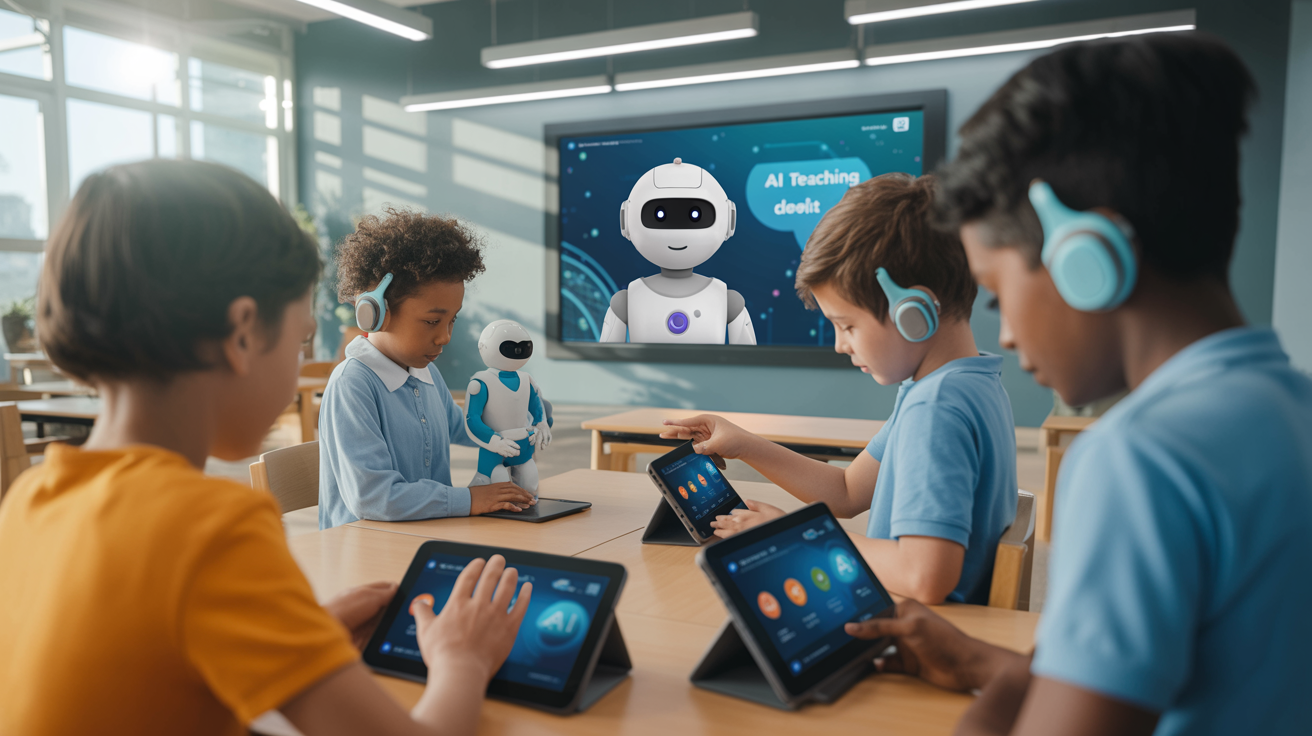
When a child practices speaking with an AI partner, every millisecond of response latency affects how natural and motivating that conversation feels. A slow response breaks immersion; a fast one keeps the child engaged, in the moment, and building real conversational confidence. Instant corrections for pronunciation and grammar — delivered the moment a word leaves their mouth — help children develop accurate accents and natural fluency from an early age. That kind of immediate feedback is something a classroom of 30 students simply can't always get from a single teacher.
AI-powered language learning tools that combine low-latency speech recognition with personalized, responsive conversations give learners something precious: a safe, judgment-free space to practice speaking without embarrassment. For many children, that psychological comfort is the difference between engaging with a new language and shutting down from anxiety. The technology isn't just faster — it's kinder, more patient, and available at 2am when a child suddenly wants to practice one more time before their school presentation.
Smart communication tools like TalkiCardo — AIPILOT's Smart AI Chat Cards for Kids — represent exactly this kind of innovation: bringing low-latency AI conversation into a safe, child-friendly physical format that makes language practice feel like play rather than homework. When the tech responds fast enough to feel like a real conversation partner, the learning sticks in a way that drills and worksheets simply can't match.
There's also a broader point worth making. Real-time translation and AI language learning tools aren't in opposition — they're complementary. Translation removes the barrier so communication can happen; language learning builds the skills so you don't always need the translation. The best educational approach uses both: instant translation to unlock immediate understanding, and ongoing conversational AI practice to build genuine fluency over time.
So, How Low Can Latency Really Go?
The honest answer in 2026 is: remarkably low, and getting lower fast. Current real-world latency ranges from 300 milliseconds on the cutting edge to around 4 seconds on older, less optimized systems. The best production-grade systems with streaming architectures and optimized infrastructure are consistently hitting under 800 milliseconds — the threshold where translation genuinely feels live. Some specialized implementations with dedicated AI hardware and on-device processing are pushing into the 120–200ms range for supported language pairs.
The theoretical floor is bounded by physics (audio has to travel), linguistics (context takes time to accumulate), and the irreducible minimum compute time for the AI models themselves. Human conversational response averages around 200 milliseconds — the fastest AI speech-to-speech systems are now approaching but not quite matching human pacing. We may never hit true zero latency, but the gap between AI translation and natural human conversation speed is narrowing every year.
What's most meaningful isn't the raw millisecond count — it's the human experience on the other side. When translation is fast enough that you stop thinking about the technology and start just... talking, it has done its job. That's the real goal. And it's closer than most people realize.
The Bottom Line
Real-time translation latency has gone from a 5-second bottleneck to sub-second in just a few years — driven by streaming architectures, smarter AI models, on-device processing, and relentless engineering focused on one simple goal: making translated conversation feel as natural as the real thing. The pipeline stages that once each added hundreds of milliseconds are now overlapping, compressing, and running in parallel to deliver something that genuinely feels like magic.
For educators, parents, and language learners, this progress isn't just a technical curiosity — it's the foundation of a new way to learn and communicate. When AI can respond fast enough to feel like a real conversation partner, the doors to language acquisition open wider than ever before. The question is no longer can technology keep up with human communication. The question is: what will you do with a world where language barriers are, for the first time, truly optional?
Ready to Experience AI Language Learning That Keeps Up With You?
AIPILOT brings low-latency AI conversation to language learners of all ages — from smart AI chat tools for kids to intelligent teaching assistants for educators. Discover how our AI-powered tools make language learning faster, more natural, and genuinely enjoyable.
Explore AIPILOT's Language Learning Solutions →