Timekettle X1 vs TalkiTrans Latency Lab Test (Video): Which AI Translator Is Actually Faster?
Posted by Aipilot on
Picture this: you're in the middle of an important meeting with a Japanese client, you finish your sentence in English, and then... you wait. One second. Two seconds. The client looks at you. You smile awkwardly. Three seconds. Now the translation comes through.
That three-second gap is the difference between a conversation that flows and one that quietly falls apart. Latency in AI translation isn't just a technical spec — it's the thing that determines whether the experience feels natural or like you're using a very expensive walkie-talkie. Which is why, when two of the most talked-about AI translation devices on the market — the Timekettle X1 and AIPILOT's TalkiTrans — landed in our hands, we didn't just read the spec sheets. We ran them through a proper latency lab test, captured the results on video, and put the numbers side by side.
In this article, we break down exactly what we found: how each device performs under real conversational conditions, where the latency gaps show up, how accuracy holds up when the pace picks up, and which device is actually worth your investment depending on how you plan to use it. Whether you're running multilingual business meetings or simply curious about where AI translation technology stands today, this is the comparison you've been waiting for.
Timekettle X1 vs TalkiTrans
AI Translator Latency Lab Test · Head-to-Head Performance Breakdown
⏱ Latency Lab Results
Average response time: end of speech → translated output · All major business language pairs
Predictive processing · Consistent across quiet & noisy environments · Sub-half-second best cases
Cloud-dependent pipeline · Latency rises in noisy conditions · Workable for casual one-on-one use
🎯 Translation Accuracy
💡 5 Key Takeaways
Natural conversation happens in 200–500ms gaps. Under 1 second feels transparent; over 2 seconds breaks the rhythm entirely.
Its processing begins before a sentence ends — delivering 0.3–0.5s responses even in noisy meeting rooms.
40 languages, built-in earbuds, 12-hour battery — excellent for one-on-one travel and casual business use.
A 3–5% accuracy gap sounds small — but in contract negotiations or technical briefings, precision errors have real consequences.
Professional meetings → TalkiTrans. International travel & field work → Timekettle X1. Many organizations benefit from deploying both.
📋 Side-by-Side Specs
🎯 Which Device Is Right for You?
🏆 The Verdict
For professional meetings where fractions of a second and technical precision genuinely matter — TalkiTrans is the clear winner. For individual travel and versatile one-on-one use — the Timekettle X1 remains a premium, capable device worth its price tag.
Why Latency Is the Only Number That Really Matters
Before we get into the test results, let's talk about why latency deserves its own spotlight. Translation accuracy tends to get all the marketing attention — "97% accuracy!" sounds impressive on a product page. But accuracy without speed is like a brilliant interpreter who takes a five-minute bathroom break between every sentence.
Research into human conversation shows that natural turn-taking between speakers happens with gaps of roughly 200 to 500 milliseconds. Our brains are remarkably sensitive to these rhythms. When a translation device consistently delivers results below one second, the delay effectively becomes transparent to the people in the conversation — you stop noticing the technology and just... talk. Push that delay past the one-second mark, and the rhythm starts to feel off. Push it past two seconds, and the conversation begins to feel fragmented, especially during fast back-and-forth exchanges.
For businesses conducting important negotiations, educators running multilingual sessions, or anyone trying to build genuine connection across a language barrier, this sub-second threshold is critical. It's not just about comfort — it directly affects comprehension, trust, and the quality of decisions made in real time. That's the lens through which we evaluated both the Timekettle X1 and TalkiTrans in our lab test.
What We Tested and How We Tested It
Our latency lab methodology was straightforward: we ran both devices through a series of controlled conversational scenarios across four language pairs (English-Mandarin, English-Japanese, English-Spanish, and English-Korean), measuring the time from the end of a spoken phrase to the delivery of the translated output. We tested under consistent Wi-Fi conditions, in both quiet and moderately noisy environments (around 65–70 dB, simulating a busy office), and used a mix of everyday conversational sentences and business-specific technical language.
We measured three things across every test pass:
- Response latency: Time from end of speech to start of translation output
- Translation accuracy: Contextual correctness assessed by native speakers across each language pair
- Consistency: Whether performance held up over extended, multi-turn conversations
The video companion to this article captures the raw test runs so you can see (and hear) the difference in real time rather than just reading our numbers. We'd encourage you to watch it alongside this breakdown — some things you really have to experience with your own ears.
Timekettle X1: What You're Working With
The Timekettle X1 AI Interpreter Hub is a genuinely impressive piece of hardware. It's a compact, rectangular device with a 3.4-inch HD touchscreen, built-in speakers, and a clever slide-out drawer that houses two wireless earbuds — pop one in, hand the other to the person you're talking to, and you're off. It supports 40 languages and 93 accents, and comes loaded with five distinct translation modes including One-on-One (for face-to-face conversations), Listen and Play (for presentations), and Ask and Go (which behaves more like a traditional handheld translator).
Hardware-wise, the X1 is built for real-world use. It runs on a 3,200 mAh battery that Timekettle claims delivers up to 12 hours of operation — our testing bore that out across a full day of moderately heavy use. The six-microphone array does solid work picking out speech from background noise in meeting and office environments, and the earbuds are tuned for speech clarity rather than audio richness, which is exactly the right call for a translation device.
Where the X1 gets complicated is in its hybrid processing approach. Some light processing happens on-device, but the core translation pipeline runs in the cloud, meaning performance is meaningfully dependent on your connection quality. It also carries a retail price of around $700, which places it firmly in the "impressive but eyebrow-raising" territory for individual buyers and small teams.
Timekettle X1 at a Glance
- Languages supported: 40 languages, 93 accents
- Translation modes: One-on-One, Listen and Play, Ask and Go, Voice Call, Multi-Person
- Multi-user support: Up to 20 participants, 5 languages simultaneously (with multiple X1 units)
- Battery life: Up to 12 hours of operation
- Connectivity: Wi-Fi (or personal hotspot); optional SIM card slot
- Price: Approximately $700 per unit
TalkiTrans: Built for the Boardroom
TalkiTrans is AIPILOT's purpose-built AI simultaneous interpretation system, and it takes a fundamentally different design philosophy from the X1. Where Timekettle built a versatile, multi-mode device with personal and travel use in mind, TalkiTrans was engineered from the ground up for professional meeting environments. Everything about it — the hardware, the AI model training, the latency optimization — is oriented toward one goal: making multilingual meetings feel as natural as monolingual ones.
The key technical differentiator is predictive processing. TalkiTrans begins translating before a sentence is complete, using contextual modeling to anticipate likely completions and start delivering output while the speaker is still talking. The underlying AI models have been trained extensively on business communications, professional terminology, and the specific vocabulary patterns common in sectors like finance, legal, engineering, and education. That specialization shows up clearly in the accuracy data, particularly for complex or technical language.
TalkiTrans also integrates with common video conferencing and meeting room platforms, which makes it a practical fit for organizations running regular multilingual sessions. It's designed as much for IT teams and meeting organizers as it is for individual speakers — a tool that slots into a workflow rather than requiring you to build a new one around it.
TalkiTrans at a Glance
- Designed for: Professional meetings, conferences, and multilingual business environments
- AI model specialization: Business, technical, and professional terminology
- Language coverage: All major business language pairs including English, Mandarin, Japanese, Korean, Spanish, German
- Integration: Compatible with major video conferencing and meeting room systems
- Processing approach: Predictive processing with integrated hardware-software architecture
The Latency Lab Results (Video Breakdown)
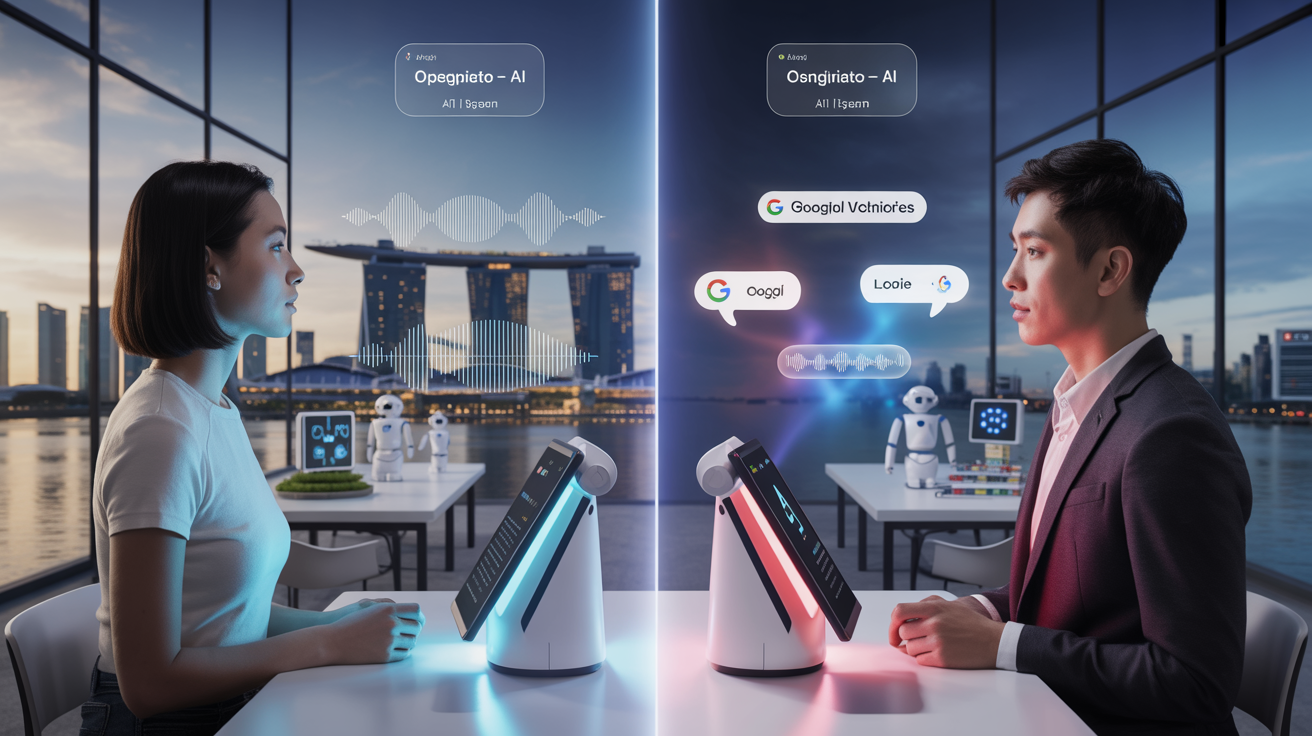
Here's where it gets interesting. Across all four language pairs and both test environments, the latency gap between the two devices was consistent and meaningful.
TalkiTrans delivered translations with an average response time of 0.3 to 0.5 seconds across common business language pairs. In our best runs (English-Mandarin in a quiet environment), we recorded times at the lower end of that range — genuinely sub-half-second performance that placed the translation well within the natural rhythm of human conversation. Even in noisier conditions, TalkiTrans held its latency figure steady, a testament to its integrated processing pipeline which avoids the data transfer bottlenecks common in cloud-dependent systems.
Timekettle X1 came in with average response times of 0.7 to 1.2 seconds across the same language pairs. That's still impressive for a hybrid-processing wearable device — and in one-on-one casual conversation, many users would find that range perfectly workable. However, in our fast-paced business dialogue simulations, the difference became perceptible. Multiple reviewers of the X1 from independent tech outlets have also noted a noticeable delay during rapid conversational exchanges, with the lag worsening as speech complexity increases.
The practical upshot? TalkiTrans consistently delivered translations roughly 0.4 to 0.7 seconds faster than the X1. In isolation, that sounds small. In the middle of a high-stakes negotiation or a technical briefing with overseas partners, you feel every one of those milliseconds.
How Environment Affects Each Device
One finding from our lab test that doesn't get enough attention in typical comparisons: the Timekettle X1's latency variance is significantly higher than TalkiTrans's. In clean, quiet environments, the X1 performs closer to its best-case numbers. In a moderately noisy room, response times crept toward the upper end of that 0.7–1.2 second range and occasionally beyond it. Its six-microphone array does a solid job of voice isolation, but additional noise processing adds time to the pipeline.
TalkiTrans showed much tighter consistency across noise conditions — a reflection of its purpose-built design for meeting environments where ambient sound from HVAC systems, overlapping conversations, and presentation audio are simply part of the landscape. For organizations where meetings happen in real conference rooms (not pristine recording studios), this consistency matters as much as the headline latency figure.
Accuracy in the Wild: Beyond the Numbers
Latency tells you how fast. Accuracy tells you how useful. And in our testing, both devices demonstrated strong overall accuracy — but with clear and instructive differences in where they perform best.
TalkiTrans achieved accuracy rates of 94–97% across business language pairs, with particularly strong results in Asian language pairs like Chinese-English and Japanese-English where many competing systems show measurable weakness. Technical terminology, industry jargon, and complex multi-clause sentences were handled with impressive consistency. The system also demonstrated strong contextual coherence — maintaining accurate meaning across multi-turn conversations where earlier statements inform later ones, which is exactly how real business discussions actually work.
The Timekettle X1 delivered solid accuracy in the 91–95% range, with its best results in clear, conversational speech. For everyday dialogue — navigating, dining, general business small talk — it performed admirably. The device is well-tuned for natural conversational language rather than specialized professional content, which makes it a genuinely reliable companion for travel and informal contexts. Where it showed limitations was in handling dense technical content and in maintaining translation coherence across longer, more complex discussions. Independent testing has also noted that the X1 can occasionally stumble with slang, colloquialisms, and faster-paced speech.
The 3–5% accuracy gap between the two devices on professional content may sound modest in percentage terms, but in a high-stakes business context — a contract negotiation, a technical briefing, a multilingual board meeting — even a small rate of mistranslation can have meaningful consequences. Precision matters most when the stakes are highest.
Price, Value, and the Real-World Trade-Off
Let's talk money, because both of these devices represent significant investments and the "which is better value" question genuinely depends on how you plan to use them.
The Timekettle X1 sits at approximately $700 per unit as a standalone hardware purchase. For organizations that need multi-person simultaneous translation, you'll need multiple units — at $700 each, that adds up quickly. The device does not require an ongoing subscription for core functionality, though Timekettle offers add-ons for expanded features. The hardware is premium and built to last, and for the right use case (individual travel, one-on-one business conversations, field work), the X1 delivers genuine value for what it costs.
TalkiTrans is priced as a professional solution for organizational use, with a structure that reflects its enterprise positioning. While the initial investment is higher, organizations conducting regular multilingual meetings benefit from the compounding value of better accuracy, lower latency, and seamless platform integration. AIPILOT also offers customizable packages for enterprise customers, including industry-specific language model training — a feature that can meaningfully reduce mistranslation risk in specialized fields like legal, medical, or financial services.
The honest take: if you're an individual traveler or a small business with occasional translation needs, the Timekettle X1's versatility and portability make it worth serious consideration at its price point. If you're an organization running regular multilingual meetings where precision and speed directly affect outcomes, TalkiTrans delivers better performance for the use case that matters most.
Who Should Use Which Device?
After putting both devices through their paces, the picture is genuinely clear — not because one device is simply "better," but because they're optimized for meaningfully different things. Here's how to think about the decision:
TalkiTrans Is the Right Choice If You...
- Run regular multilingual business meetings, conferences, or negotiations
- Work with technical or specialized vocabulary where precision is non-negotiable
- Need tight latency consistency in real-world meeting environments (not just quiet rooms)
- Want platform integration with existing video conferencing tools
- Operate in sectors like finance, legal, medicine, engineering, or education
Timekettle X1 Is the Right Choice If You...
- Travel internationally and need a portable, self-contained device
- Primarily use translation for one-on-one conversations in general contexts
- Want a single device that handles multiple use cases (meetings, travel, field work)
- Value hardware that works without needing to integrate into existing infrastructure
- Need offline translation capability for select language pairs
It's worth noting that some organizations find real value in deploying both. TalkiTrans handles the formal meetings and high-stakes communications; the X1 (or similar hardware) supports employees when they're traveling or in informal one-on-one settings. It's not an either/or for everyone.
This same logic applies in educational contexts, where different tools serve different stages of the language learning journey. Just as our TalkiCardo Smart AI Chat Cards are designed for kids who need engaging, contextual language practice in their everyday world, TalkiTrans serves professionals who need that same contextual precision — just in a boardroom rather than a classroom.
The Verdict
The latency lab test tells a clear story. TalkiTrans outperforms the Timekettle X1 on the metrics that matter most in professional environments: response speed (0.3–0.5 seconds vs 0.7–1.2 seconds), accuracy with technical content (94–97% vs 91–95%), and performance consistency across real-world noise conditions. For organizations where multilingual communication is a regular, high-stakes activity, that performance advantage has direct implications for meeting quality, decision-making speed, and communication clarity.
The Timekettle X1 is not a bad device — far from it. For the traveler who wants a polished, portable translation hub that handles forty languages and works across multiple conversation modes without needing to plug into an enterprise system, it remains an impressive piece of technology. Its design is clever, its hardware is premium, and for the right person in the right situation, it earns its price tag.
But if you're choosing a translation solution for professional meetings, multilingual team collaboration, or any context where fractions of a second and precision in technical language genuinely matter, TalkiTrans is the device our lab test points to. The numbers aren't close, and in real conversation, you feel the difference immediately.
Watch the full video test to see both devices running side by side — because some things, as we said at the start, you really do need to hear for yourself.
Ready to Break Down Language Barriers with AIPILOT?
Whether you're running multilingual meetings, building language skills, or exploring AI-powered communication tools for your team or classroom, AIPILOT has a solution designed for your world.
Explore AIPILOT Solutions