Speech-to-Text: How It Works and How to Get It Accurate
Posted by Aipilot on
Picture this: your child says "I want to eat a bear" into their language learning app, and instead of getting a gentle correction, the AI cheerfully transcribes it as "I want to eat a beer." Funny? Absolutely. Helpful for their English learning journey? Not so much.
That little mix-up captures why speech-to-text accuracy matters far more than most people realize. Whether you are a student practicing a foreign language, a teacher recording lesson notes, or a professional navigating a multilingual meeting, the difference between a good and a poor speech-to-text system can be the difference between feeling empowered and feeling completely misunderstood.
Speech-to-text (also called STT or automatic speech recognition) has undergone a dramatic transformation in recent years. The best systems in 2026 can reach near-human accuracy on clear audio, handle multiple languages in a single sentence, and understand diverse accents far better than ever before. But accuracy still varies enormously depending on conditions, content, and how you use the technology.
In this guide, we break down how speech-to-text actually works, what realistic accuracy looks like, the key factors that influence results, and — most importantly — what you can do to get better outcomes. Whether you are a curious learner, an educator, or a parent exploring AI-powered language tools for your child, this is the guide you have been looking for.
What Is Speech-to-Text, Really?
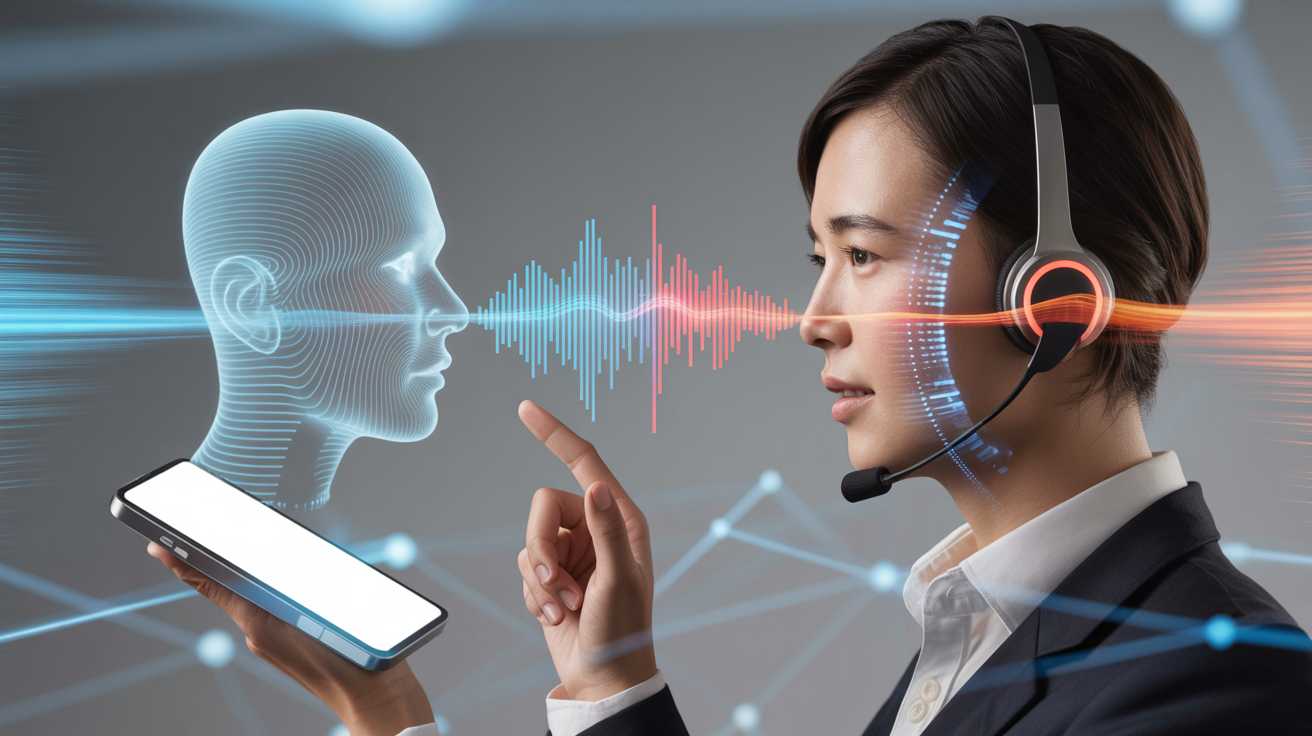
Speech-to-text technology is an AI-powered system that automatically converts spoken words into written text. You speak into a microphone — on your phone, laptop, smart speaker, or a dedicated device — and the system produces a written transcript of what you said. It sounds simple, but underneath that seamless experience lies a genuinely impressive chain of artificial intelligence processes working together in fractions of a second.
You might also hear speech-to-text referred to as Automatic Speech Recognition (ASR) or voice-to-text. These all describe the same core idea: your voice becomes written words. This is the opposite of text-to-speech (TTS), which reads written words aloud to you. It is a common mix-up, so just remember — if you are speaking and words appear on a screen, that is speech-to-text at work.
Today, speech-to-text powers an enormous range of everyday tools: live captions on video calls, voice assistants on smartphones, meeting transcription apps, dictation software in word processors, and AI-powered language learning platforms. It is quietly running in the background of many technologies we now take for granted.
How Speech-to-Text Works Under the Hood
You do not need to be an engineer to appreciate how clever speech-to-text really is. At its core, the process involves several fascinating stages happening faster than you can finish a sentence.
Step 1: Capturing and Cleaning the Audio
The journey begins the moment you speak. Your voice creates sound waves that a microphone captures and converts into a digital audio signal. Before any AI even looks at your words, the system typically performs some housekeeping: removing background noise, normalizing the volume, and splitting the audio into short, manageable time frames. Think of it as tidying up the room before a guest arrives.
Step 2: Feature Extraction — Turning Sound into Data
Raw audio is not something a neural network can directly read. So the system converts it into a visual representation called a spectrogram — essentially a picture of sound that shows how frequencies change over time. A popular method called Mel-Frequency Cepstral Coefficients (MFCCs) maps this audio onto a scale that mirrors how the human ear actually perceives sound, making it far easier for AI models to find meaningful patterns.
Step 3: The AI Model Does Its Magic
This is where modern speech-to-text gets genuinely impressive. Today's best systems use transformer-based neural networks — the same family of deep learning architecture that powers large language models. Transformer models excel at processing sequential data, capturing long-range dependencies in speech that older systems would completely miss. Traditional speech recognition systems required separate, hand-engineered components for acoustic modeling, pronunciation, and language modeling. Modern end-to-end neural networks now map directly from audio signal to text in a single unified process, making them significantly more accurate and adaptable across different languages and accents.
The model does not just hear individual sounds in isolation. It reads context the same way a clever listener does — using what came before a word to make a better guess about what comes next. That is how it can figure out whether you said "two," "to," or "too" without you spelling it out.
Step 4: Post-Processing and Output
Once the AI has produced a raw transcript, a final layer of processing adds punctuation, capitalizes proper nouns, formats numbers and dates, and in more advanced systems, identifies who said what (called speaker diarization). The end result lands in front of you as polished, readable text — ready to be saved, edited, searched, or fed into another AI system entirely.
How Accurate Is Speech-to-Text in 2026?
Here is the good news first: the best speech-to-text models available in 2026 can reach 95–98% word accuracy on clean, clear audio. That means only two to five errors per hundred words — impressive enough that many transcripts require little to no manual correction for everyday use cases.
Now, here is the honest part: that headline number can be misleading. Accuracy drops meaningfully the moment conditions become less than ideal. Accented speech, background noise, fast talkers, technical vocabulary, and conversations switching between languages all challenge even the best systems. Real-world accuracy in noisy or complex settings can range anywhere from 70% to 92%, depending on the situation.
The gap between a 95% accurate system and an 85% accurate one might sound small, but the lived experience is very different. At 95%, you are looking at a handful of minor typos. At 85%, roughly one word in every seven is wrong — which can completely change the meaning of a sentence and make a transcript frustrating to use. For language learners, where every word matters for building correct habits, that distinction is especially important.
How Accuracy Is Measured (Without the Math Headache)
The standard method for measuring speech-to-text accuracy is called Word Error Rate (WER). It works by comparing the AI's transcript to a verified, human-written reference and counting three types of mistakes:
- Substitutions — a wrong word is used ("bear" instead of "beer")
- Insertions — an extra word appears that was never spoken
- Deletions — a word that was spoken gets dropped from the transcript
The total number of errors is divided by the total number of reference words, then multiplied by 100 to give a percentage. A WER of 5% means 95% accuracy. Lower WER is always better.
WER is a useful starting point, but it does not tell the whole story. A system that transcribes "cannot" as "can't" gets marked wrong in a WER calculation, even though the meaning is completely identical. For practical purposes — especially in language learning and communication — meaning preservation often matters more than word-for-word matching. This is why researchers and developers are increasingly paying attention to metrics like Semantic WER, which evaluates whether the intended meaning survived the transcription, not just whether each individual word was identical.
Another important thing to understand: benchmark scores from clean, studio-recorded audio do not necessarily reflect what a system will do with your actual voice in your actual environment. Real-world performance depends heavily on the specific conditions of use, which brings us to the most practical part of this guide.
What Affects Speech-to-Text Accuracy
Understanding what drives accuracy is genuinely empowering — because many of these factors are things you can actually control or work around. They fall into three broad categories.
Audio Quality Factors
No AI model in the world can recover information that was never captured clearly in the first place. Audio quality is the single biggest lever on accuracy, and it is almost entirely in your hands.
- Microphone quality: Built-in laptop microphones are convenient but generally produce lower accuracy than a dedicated USB headset or external mic. Even an affordable wired headset can make a noticeable difference.
- Background noise: Traffic sounds, air conditioning hum, music, and other people talking all interfere with recognition. Coffee shops and open-plan offices are particularly challenging environments.
- Audio compression: Heavily compressed audio formats introduce artifacts that confuse models. Where possible, using uncompressed or lightly compressed audio produces better results.
- Room acoustics: Hard walls and surfaces create echo and reverberation. Soft furnishings, carpets, and curtains absorb sound and naturally improve recording quality.
Speaker-Related Factors
Every voice is unique, and speech-to-text systems have to account for an enormous range of speaking styles, accents, and physical characteristics.
- Accent and dialect: Models trained predominantly on one variety of a language may struggle with regional accents. Modern AI systems handle accent diversity far better than earlier generations, but gaps remain — especially for less-resourced languages and dialects.
- Speaking pace: Very fast or very slow speech can reduce accuracy. Most systems perform best at a natural, conversational pace.
- Pronunciation clarity: Mumbling, heavy fatigue, or slurred speech challenges even the best models. Children's speech can also be harder to transcribe accurately due to developing pronunciation patterns.
- Age and voice characteristics: Younger children's voices have different pitch profiles and less consistent pronunciation, which is why AI tools designed specifically for kids — like AIPILOT's TalkiCardo Smart AI Chat Cards — are purpose-built and fine-tuned to handle the way children actually speak, rather than relying on generic adult-focused models.
Content and Context Factors
- Vocabulary complexity: Everyday conversational language transcribes more accurately than highly specialized jargon, rare proper nouns, or technical terminology.
- Numbers, dates, and codes: Spoken numbers and alphanumeric sequences are notoriously tricky because the same sounds can represent many different things depending on context.
- Language mixing (code-switching): Switching between two languages mid-sentence — common in multilingual families, international schools, and regions like Singapore — is one of the hardest challenges for speech recognition. The most advanced models in 2026 are beginning to handle code-switching natively across multiple language pairs, which is a significant leap forward for learners in multilingual environments.
Accuracy in the Real World: What to Actually Expect
Rather than fixating on a single percentage, it helps to think about accuracy in the context of specific situations. Here is a realistic picture of what different environments typically produce:
- Clean studio or quiet home recording: 95–98% accuracy. Near-perfect transcripts with minimal editing needed.
- Video conference calls: 85–92% accuracy. Network compression and variable microphone quality add errors.
- Phone conversations: 80–88% accuracy. Audio compression and line quality are the main culprits.
- Noisy environments (offices, public spaces): 70–85% accuracy. Background noise significantly degrades results.
- Heavily accented speech: 75–90% accuracy, depending heavily on how well the model was trained on that accent.
- Domain-specific or technical content: 80–95% accuracy, depending on whether the model has been primed with relevant vocabulary.
The practical takeaway here is not to judge a speech-to-text tool by benchmarks alone. Always test it with audio that actually resembles your real situation — whether that is a child practicing English pronunciation, a teacher dictating lesson notes, or a professional conducting multilingual interviews.
Speech-to-Text for Language Learning and Education
If there is one area where speech-to-text technology has quietly become transformative, it is education and language learning. The ability to instantly see your spoken words on a screen creates a powerful feedback loop that simply was not available to previous generations of learners.
For language learners, speech-to-text serves as an immediate, judgment-free mirror. When a learner speaks a sentence and sees it transcribed correctly, it provides real-time confirmation that their pronunciation was clear enough for an AI to understand — which is a meaningful milestone. When the transcript shows a different word than intended, it pinpoints exactly where the pronunciation needs work, far more precisely than a teacher's general "try again."
For children in particular, this feedback loop is incredibly valuable. Kids who can speak their thoughts rather than laboriously type or write them are free to focus on the ideas themselves — building vocabulary, confidence, and fluency simultaneously. Research consistently shows that pairing auditory input with visual output (hearing a word and seeing it written at the same time) improves both retention and comprehension, which is exactly what speech-to-text facilitates in learning environments.
Speech recognition also plays a central role in oral practice tools designed specifically for young learners. Rather than passively consuming content, children engage in active speaking practice where their voice directly drives the experience — building the kind of confident, communicative fluency that grammar drills alone can never replicate. This is precisely the philosophy behind AI language learning tools that prioritize real conversation practice over rote memorization.
Practical Tips to Improve Speech-to-Text Accuracy
The good news is that many of the factors affecting accuracy are firmly within your control. Whether you are a student, a teacher, or a parent helping a child, these practical adjustments can make a meaningful difference.
Optimize Your Recording Environment
- Find the quietest space available, even if it just means stepping away from a busy room.
- Close windows facing noisy streets and turn off fans or air conditioning if possible.
- Soft furnishings like cushions, curtains, and carpets naturally reduce echo and improve audio clarity.
- For children using voice learning tools, a quiet bedroom or study corner makes a surprising difference.
Use the Right Microphone
- A dedicated headset or USB microphone consistently outperforms built-in laptop or tablet microphones.
- Hold a phone or handheld microphone closer to your mouth rather than placing it flat on a table.
- For young children, child-sized headsets or devices designed with close-proximity microphones are ideal — they capture a child's softer voice far more reliably.
Speak Naturally and Clearly
- Aim for a natural conversational pace — not artificially slow, but not rushed either.
- Enunciate reasonably clearly without sounding robotic. Natural speech with good clarity gives the best results.
- For language learners, think of clear speaking as a skill in itself — practicing with AI tools reinforces good pronunciation habits over time.
Prime the System with Context
- Many speech-to-text tools allow you to specify the domain, language, or subject matter beforehand. Use this feature whenever it is available.
- If the tool supports custom vocabulary or keyword prompting, add specialized names, places, or terms that frequently appear in your content.
- For multilingual users, select the correct primary language setting and, where supported, enable multilingual or code-switching modes.
Use Audio Format Wisely
- When recording for transcription, prefer lossless or lightly compressed audio formats over heavily compressed ones.
- Avoid speakerphone or phone-speaker playback during recording — the audio bouncing through a room adds noise that dramatically hurts accuracy.
Choose Tools Designed for Your Use Case
Generic speech-to-text tools designed for professional transcription are not always the best fit for education or language learning. Purpose-built platforms that understand the specific context — a child learning English, a student practicing Mandarin tones, or a professional navigating multilingual conversations — tend to deliver far better results because the underlying models and feedback systems are tuned to that audience. Accuracy on a benchmark dataset and accuracy on your actual use case are very different things, so always test before committing.
Where Speech-to-Text Is Headed
The most exciting shift in speech-to-text right now is not about squeezing another percentage point off a benchmark. It is about the technology becoming contextually aware — understanding not just what you said, but what you meant, what came before, and what situation you are in. Leading systems in 2026 can already carry context across an entire conversation, use the information from earlier turns to clarify ambiguous words later, and adapt their expectations based on the domain they are working in.
For language learners and educators, this contextual awareness opens doors that were previously closed. An AI that understands you are practicing Spanish vocabulary will interpret your attempts more charitably and helpfully than a generic transcription engine. An AI that knows a child has been working on the letter sounds "th" and "f" can provide more targeted feedback than one encountering that child's voice for the first time.
Multilingual support is also accelerating rapidly. Code-switching — the natural habit of multilingual speakers to blend languages mid-sentence — is increasingly handled natively by top-tier models. In a world where millions of learners grow up speaking two or three languages at home while learning additional ones at school, this is not a niche feature. It is an essential capability for AI tools that want to serve the real world rather than an idealized one.
What does this mean for you? The gap between what speech-to-text can do in a lab and what it can do in your child's bedroom, your classroom, or your online lesson is closing faster than ever. The tools available to learners and educators today are genuinely remarkable — and the ones coming next year will be even better.
Frequently Asked Questions
How accurate is speech-to-text in everyday use?
On clean, clear audio in a quiet environment, the best speech-to-text systems in 2026 achieve 95–98% word accuracy. In noisier or more complex conditions — phone calls, video conferences, accented speech — accuracy typically ranges between 80% and 92%. The exact figure depends heavily on your microphone quality, environment, speaking clarity, and the specific tool you are using.
What is Word Error Rate (WER) and why does it matter?
Word Error Rate is the standard measure of speech-to-text accuracy. It calculates the percentage of words in a transcript that contain errors — whether a wrong word, an extra word, or a missing word. A WER of 5% means 95% of words were transcribed correctly. Lower WER is better. It is a useful comparison tool, but keep in mind that WER on clean test audio does not always match the performance you will see on real-world recordings.
Can speech-to-text understand children's voices?
Standard speech-to-text models are predominantly trained on adult speech, which means children's voices — with their higher pitch, developing pronunciation, and different speech rhythms — can present real challenges for generic tools. Purpose-built AI tools designed specifically for children, like those in AIPILOT's learning ecosystem, are tuned to handle these characteristics, making them significantly more reliable and encouraging for young learners.
Does speech-to-text work for multiple languages?
Yes, and it is getting better all the time. Most leading speech-to-text tools support a wide range of languages. Advanced systems in 2026 can even handle code-switching — where a speaker naturally blends two languages in a single sentence — which is particularly useful for multilingual learners and international families.
How can I improve speech-to-text accuracy without changing my software?
The most impactful changes are environmental and habitual rather than technical: use a better microphone, reduce background noise, speak at a natural but clear pace, and whenever possible, find a quieter space to record. These simple adjustments can dramatically improve results without changing any settings or switching to a different tool.
The Bottom Line
Speech-to-text technology in 2026 is impressive, genuinely useful, and still very much a product of the conditions you give it to work with. The underlying AI — transformer models, end-to-end neural networks, contextual language understanding — has never been more capable. But the biggest gains in your day-to-day experience will come from the choices you make: your microphone, your environment, how you speak, and whether you are using a tool designed for your specific needs.
For language learners and educators, speech-to-text is not just a transcription tool. It is a real-time mirror for pronunciation, a tireless practice partner, and an empowering bridge between speaking and reading. When it works well, it does not just capture what you said — it helps you say it better the next time. And in the world of language learning, that is everything.
Ready to Experience AI-Powered Language Learning?
AIPILOT brings together cutting-edge speech recognition, AI conversation partners, and personalized feedback in one platform designed to make language learning genuinely enjoyable — for kids and adults alike.
Explore AIPILOT